


Exterior
Length is where the 2025 and 2026 cars part company. Eight 2025 configurations measure 4,706 mm, while the three 2026 configurations measure 4,796 mm on the same 2,810 mm wheelbase. A dealer building a mixed container meets those 90 mm at the parts counter, because bumpers, lamps and body trim do not swap between the two years. Height is 1,845 mm on most versions and 1,840 mm on the four-wheel-drive cars. At 4,706 mm, the Jetour Shanhai T1 puts its wheels close to the corners on a 2,810 mm wheelbase, and the cabin reads larger than the footprint suggests.
Ground clearance is quoted unladen at 185 mm, 190 mm or 200 mm depending on configuration, and the 2025 cars list 600 mm of wading depth. Those figures describe gravel, farm tracks and flooded streets, and the specification lists no low-range transfer case and no locking differential. Approach and departure angles read 28 and 29 degrees on the 2025 cars and 28 and 28 on the 2026, while one 220 km XWD version drops the approach angle to 27. The three 2026 cars leave wading depth and ground clearance blank, so confirm both before quoting them. Tyres are 235/65 R18 on the 100 km front-drive car and 235/60 R19 elsewhere, which means a mixed order stocks two sizes.
Interior
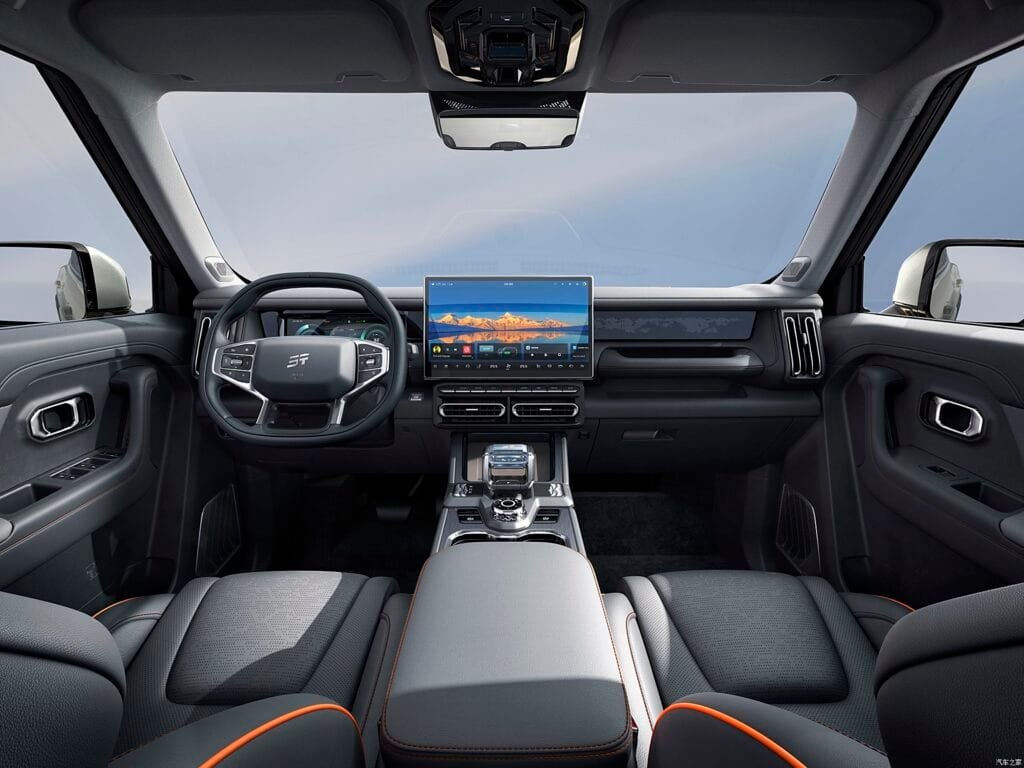
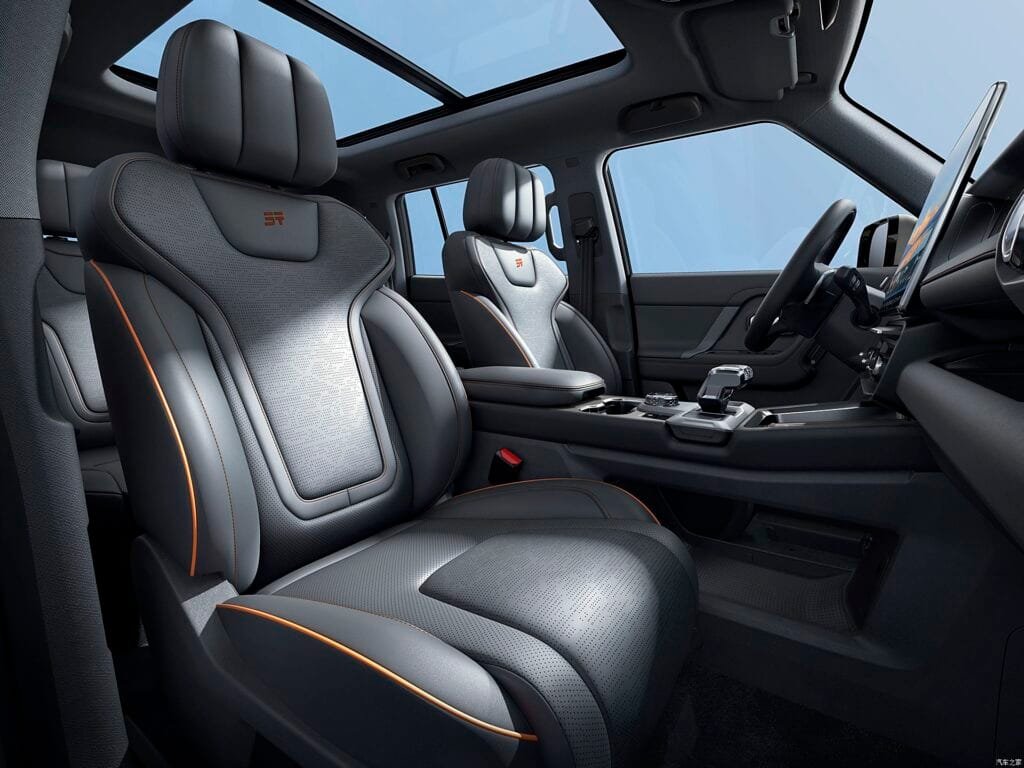
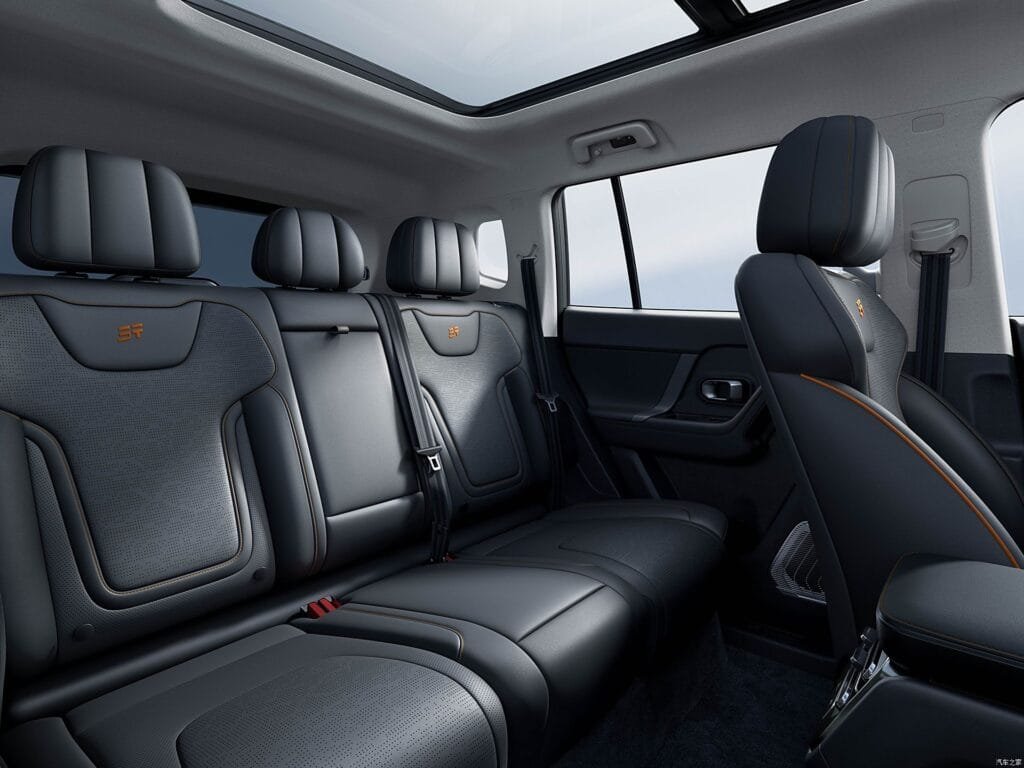
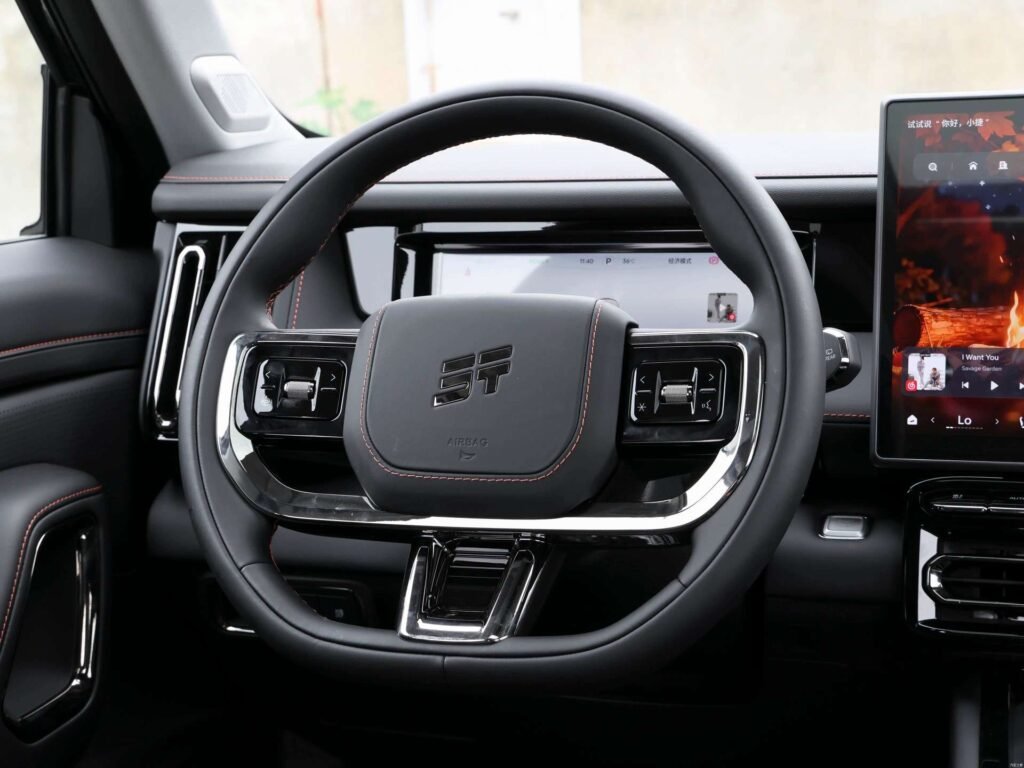
Inside, the Jetour Shanhai T1 carries five people on a 2,810 mm wheelbase and measures 1,967 mm across the body, which is wide for a compact SUV and shows in shoulder room. All eleven configurations get the same 15.6-inch landscape centre screen and a 10.25-inch instrument cluster. Seat material is faux leather throughout, which is the practical choice for dusty markets and rental fleets. The panoramic roof opens on every configuration except the 100 km entry car, and ambient lighting follows the same rule. Air quality management is fitted across the range, an item worth raising with fleet buyers who work in dust.
Audio and connectivity do most of the splitting across the eleven configurations. Some configurations list a SONY system with nine or fourteen speakers, and the rest carry eight speakers with no brand on them. Only the 2026 XWD Discovery Smart Drive and the XWD Conquering Intelligent Driving run 5G, and the other nine stay on 4G. Front seat functions, cruise control type and assistance level move with trim on the Jetour Shanhai T1, and the entry car gets fixed-speed cruise without L2 assistance. A car fridge is an option on the Star and Moon Goddess version alone, so a dealer promising one on every unit is promising something the table does not support.
How it drives
Power on the Jetour Shanhai T1 adds up from three sources, so the headline number is a sum. The 1.5T engine contributes 115 kW and 220 N·m, and the front motor adds 150 kW and 310 N·m. A rear motor adds 175 kW in the 2025 four-wheel-drive cars or 190 kW in the 2026 ones, which is why the totals read 265, 440 and 455 kW. Four-wheel drive here means two motors, one per axle, and the table lists it as dual motors. Top speed is 180 km/h on most versions and 200 km/h on the three 440 kW four-wheel-drive cars.
Battery choice sets the electric range, and one configuration stands out. The 18.3 kWh pack returns 100 km on CLTC and 76 km on WLTC, 27.2 kWh returns 147 to 150 km on CLTC, and 43.2 kWh returns 220 km on CLTC in four-wheel drive. The 226 km CLTC figure belongs to the front-drive 226KM Off-Road alone, where WLTC reads 175 km. Charging is 41 kW DC on every car, half an hour from 30% to 80%, or 37 minutes on the 43.2 kWh cars, with AC charging at 4 hours or 6 hours. Treat the Jetour Shanhai T1 as a destination-charging car with an occasional top-up, not as a pure-electric commuter.
Fuel consumption on the Jetour Shanhai T1 is quoted at 0.81 to 1.35 L/100 km on WLTC, and every one of those figures starts from a charged battery. It is a combined cycle that counts the electrical share, and no flat-battery figure is published for this car. The 70 L tank is identical across all eleven configurations, so what separates them is electric range and driven wheels, not long-distance ability. A buyer who does not want a plug should look at the petrol Traveller instead.
Interior & details
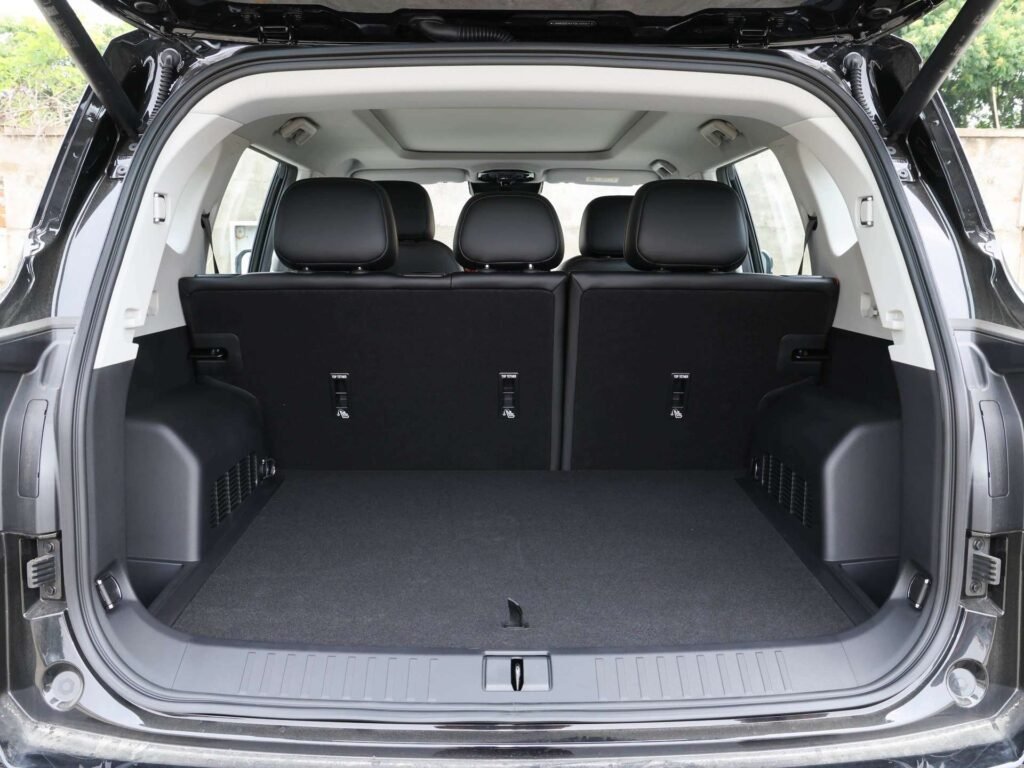
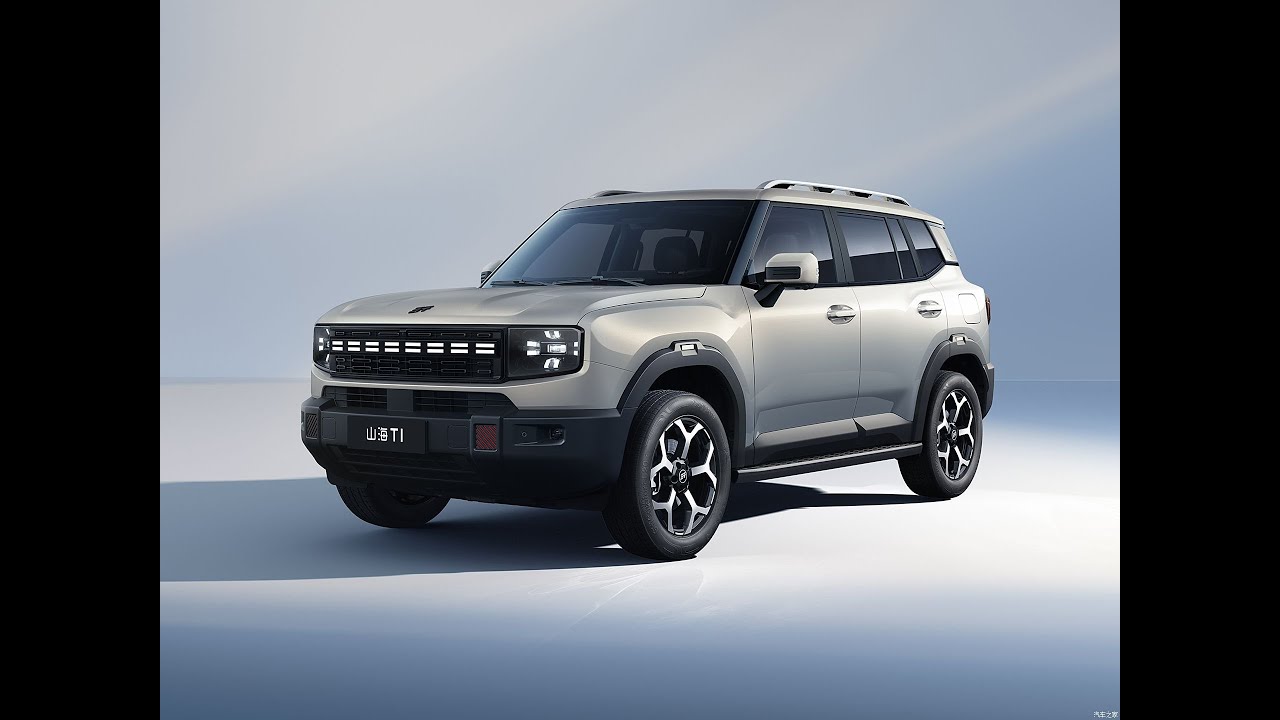
Interior and close-up detail from the Jetour ShanHai T1 current production car.

Video
Before you ask us for a quote, watch the video for a closer look at the details.
FAQ
Is the Jetour Shanhai T1 a plug-in hybrid or a range-extender?
The Jetour Shanhai T1 is a plug-in hybrid, and its 1.5T engine drives the wheels through a single-speed DHT. A series hybrid uses the engine only to charge the battery, and this car does not work that way. Every configuration of the Shanhai T1 PHEV keeps the engine, the front motor and a battery, and the car can run on electricity alone. Check the energy type on the paperwork, because the two layouts are certified differently in most markets.
How far does it go on electric power, and how long does it take to charge?
Range on the Shanhai T1 PHEV depends on the battery fitted. The 18.3 kWh pack gives 100 km on CLTC and 76 km on WLTC, 27.2 kWh gives 150 and 117 km in front-drive form, and 43.2 kWh gives 226 and 175 km. DC charging runs at 41 kW, covering 30% to 80% in half an hour, or 37 minutes on the 43.2 kWh packs. AC charging takes 4 hours, or 6 hours on the largest battery.
Why is it called Jetour T1 abroad but Shanhai T1 in China?
The Jetour Shanhai T1 is one vehicle under two names. Shanhai is the domestic sub-brand badge, and export markets sell the car as the Jetour T1, with i-DM or Lightning i-DM in some of them. Part numbers and service items are shared, so a dealer can order from either catalogue. Ask for the export name on the quotation, because shipping documents and customs codes follow it.
Can the Jetour T1 be imported to my country?
Import rules depend on the destination. Markets with no type-approval requirement can take the T1 plug-in hybrid SUV directly. Markets that require one, the European Union most often, need a certified version supplied from the factory, and that supply is not automatic. We confirm which case applies to the Jetour Shanhai T1 before a deposit is paid, and set out the documents and port handling step by step.
Can the Jetour Shanhai T1 be exported as a new car?
No. The Jetour Shanhai T1 cannot be exported as a new car today, because new-car export requires factory authorization and only a limited number of models from certain brands hold it. Most units leave China as used vehicles instead, whatever the destination rules allow. Ask us for the current list of models that qualify for new-car export before you plan a shipment.


Reviews
There are no reviews yet.