
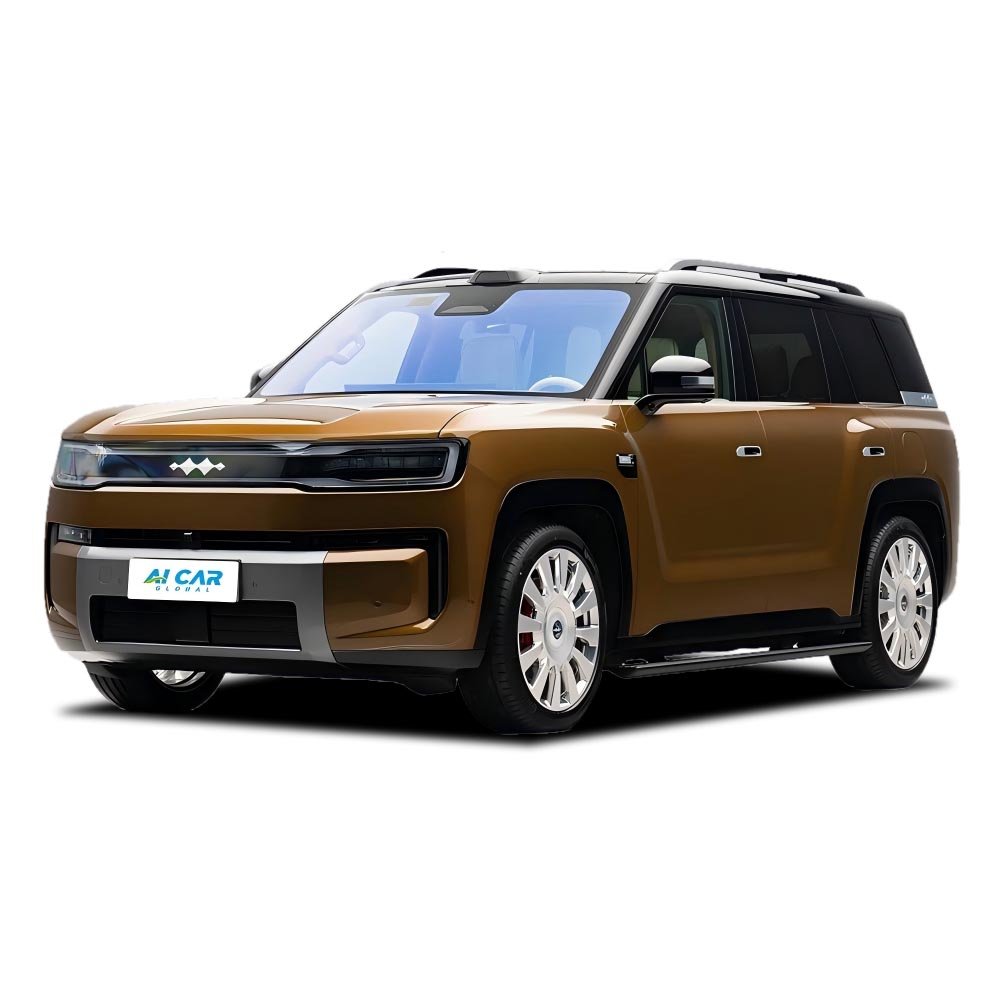
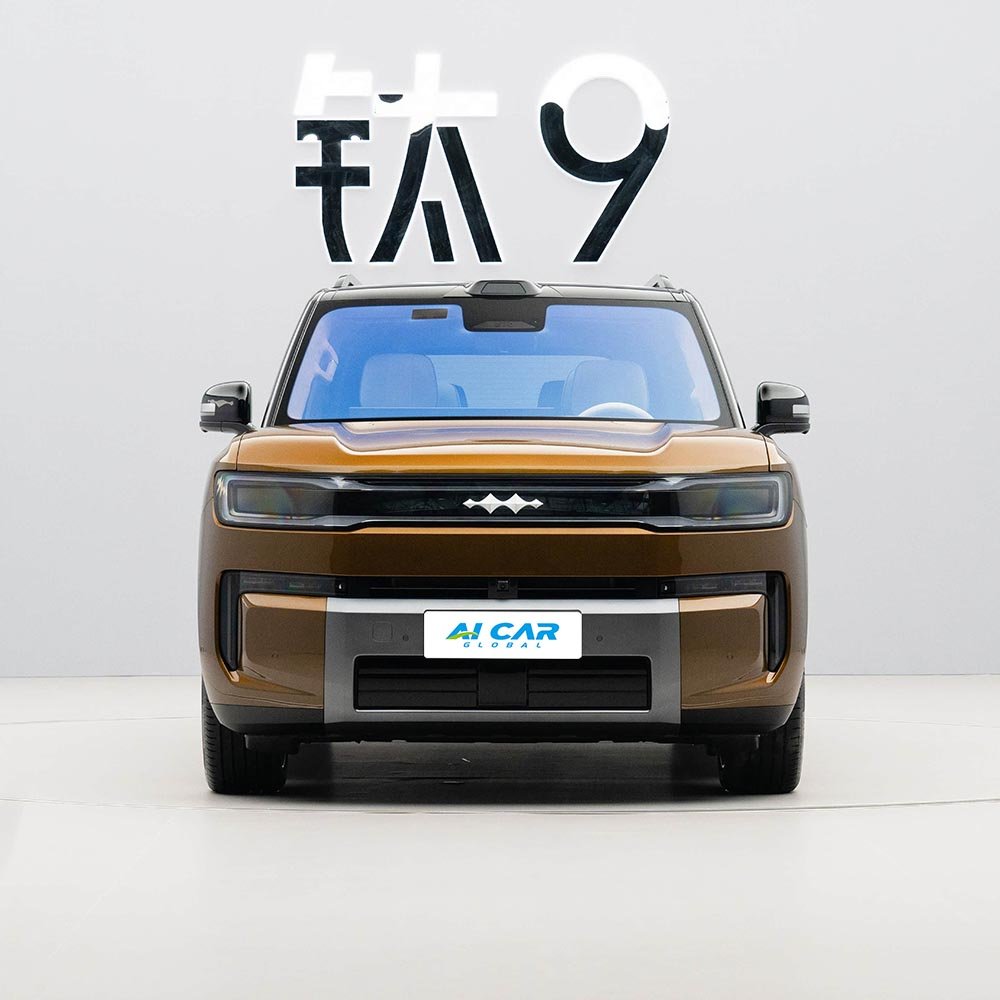
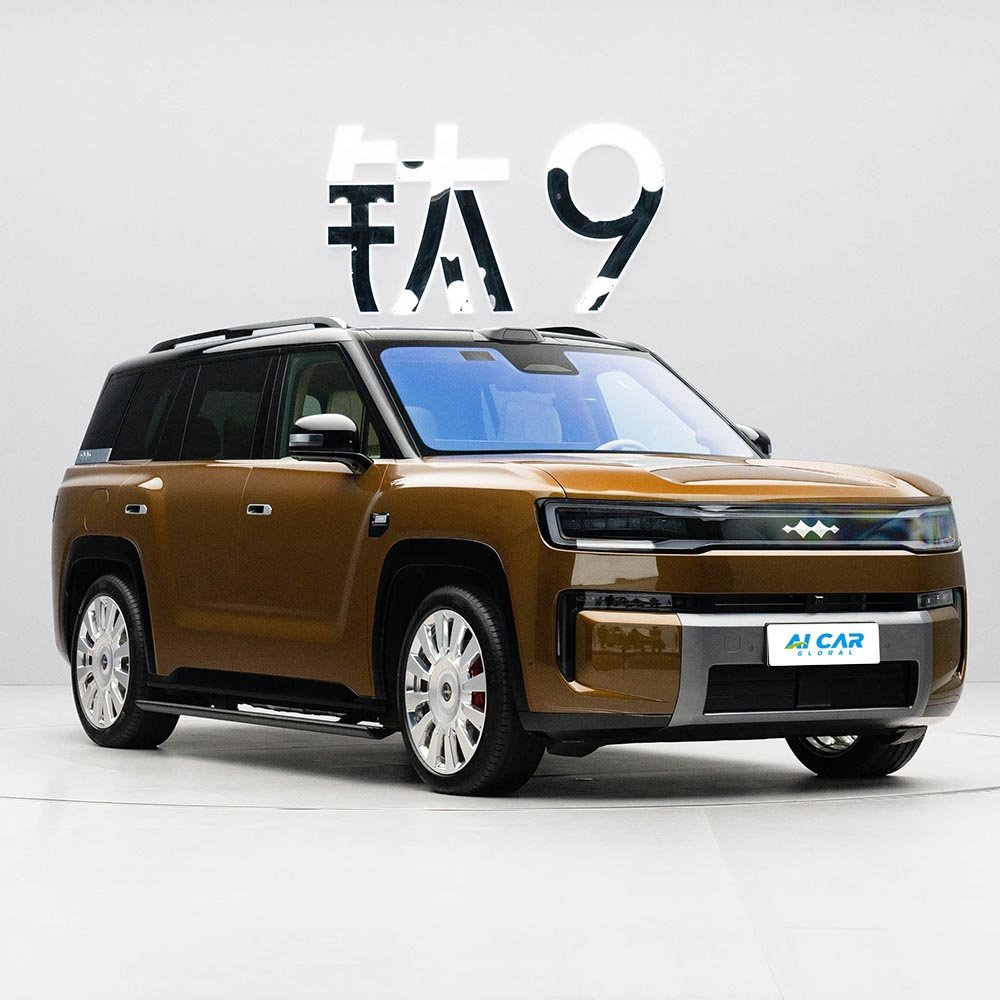
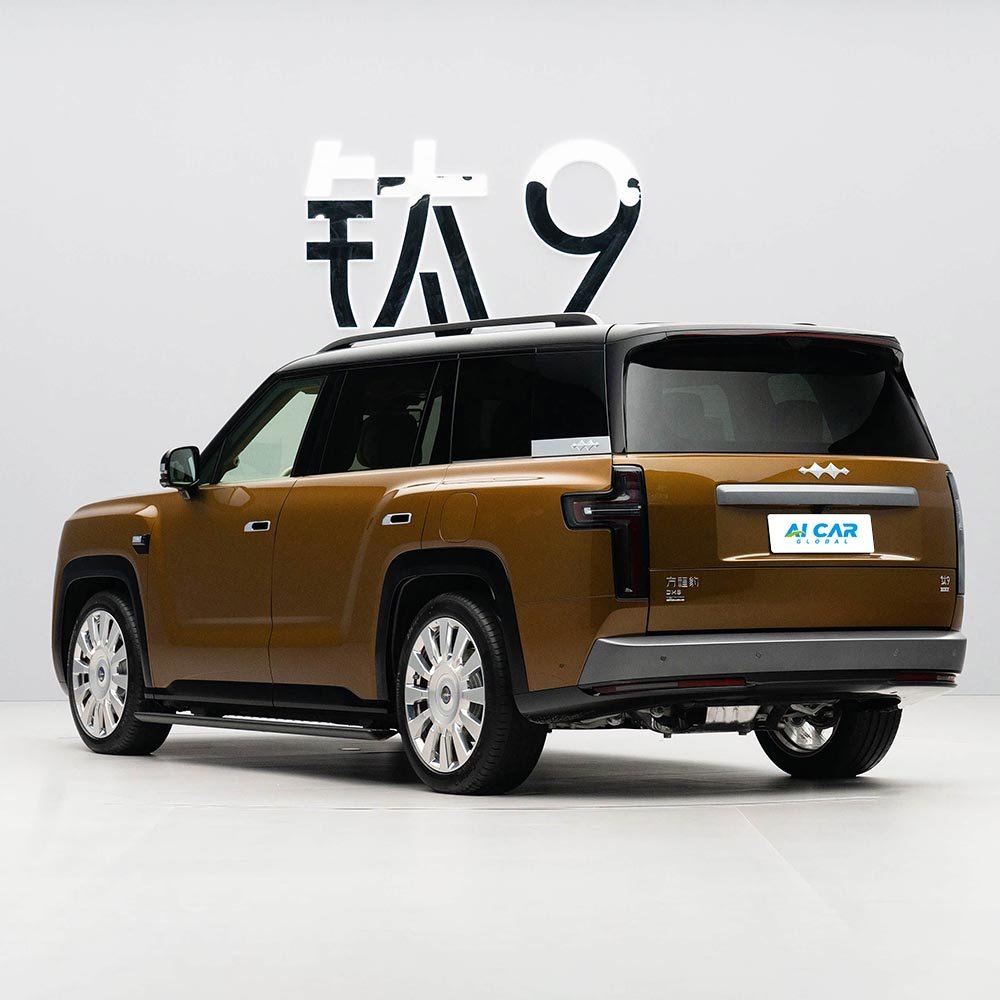
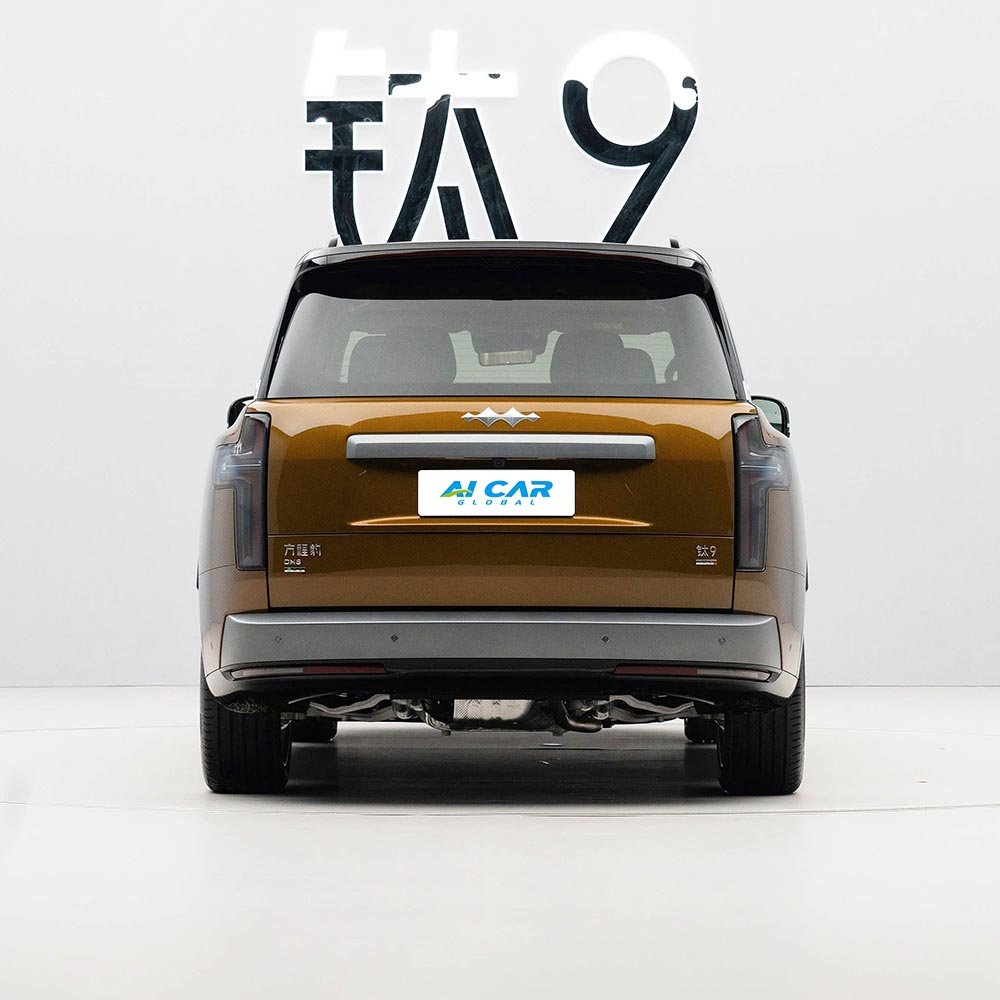
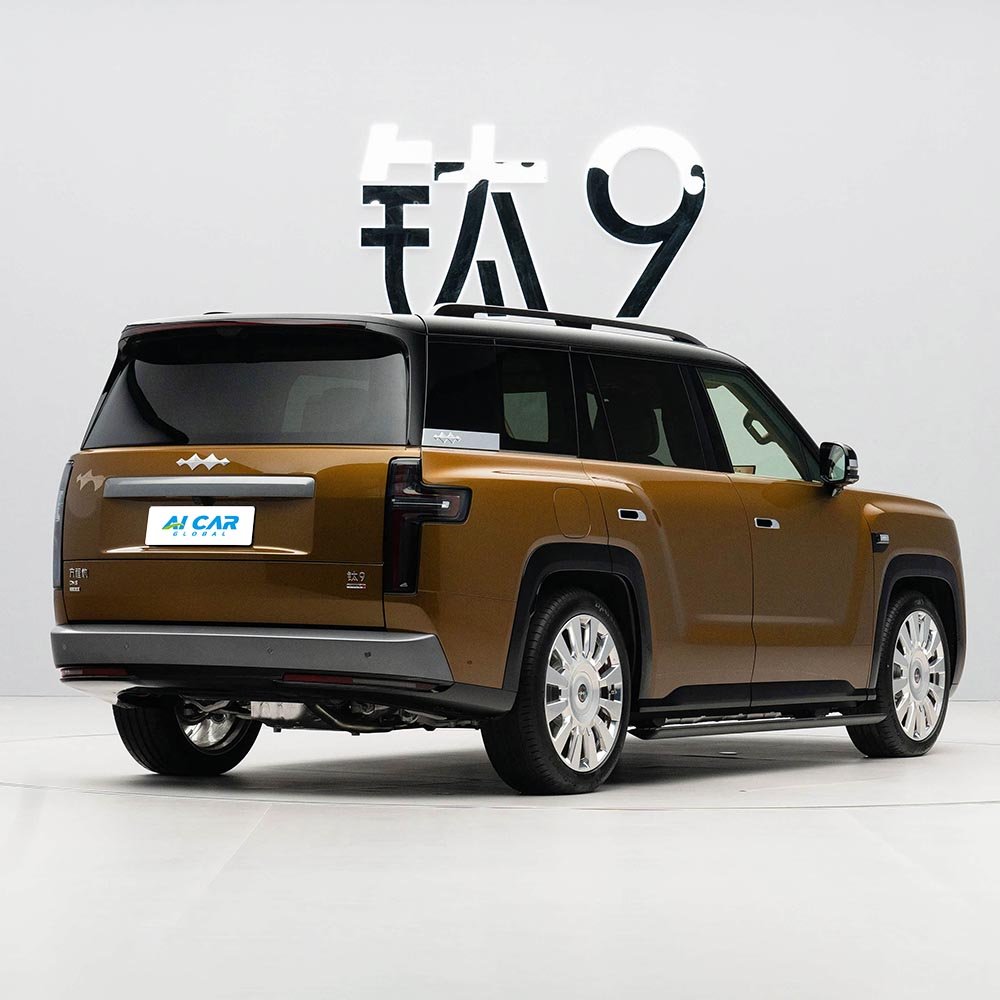
Exterior
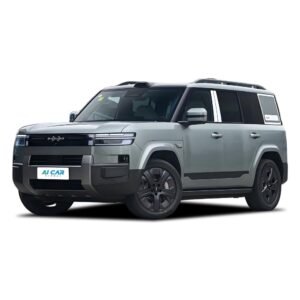
At 5,270 mm long, 1,999 mm wide and 1,880 mm tall on a 3,130 mm wheelbase, the Titanium 9 is a large three-row SUV. Length and width both matter for a dealer, because a test route has to allow a proper turning circle and a parking bay has to fit the car. Curb weight is 2,865 kg on one version and 2,965 kg on the other two. The 655 litre boot and 19-degree approach angle are quoted across the line, as is the 30-inch centre screen inside the cabin. A delivery plan should use the heavier figure, since two of the three configurations carry it.
Every Titanium 9 configuration uses four-wheel drive with motors at the front and rear axle, a 115 kW engine and a 30-inch centre screen. The 400 kW and 675 N·m figures apply to all three, as does the 400 km CLTC electric range. Top speed is 200 km/h on one version and 220 km/h on the other two. A distributor can write one mechanical description for the whole order and use the training time on the six-seat layout. Two of the three configurations also quote the higher top speed. A stock card should show that difference next to the curb weight and the configuration code, because the body and the cabin do not reveal it to the buyer. Buyers often start with the Fangchengbao model range before narrowing to this SUV.
Interior
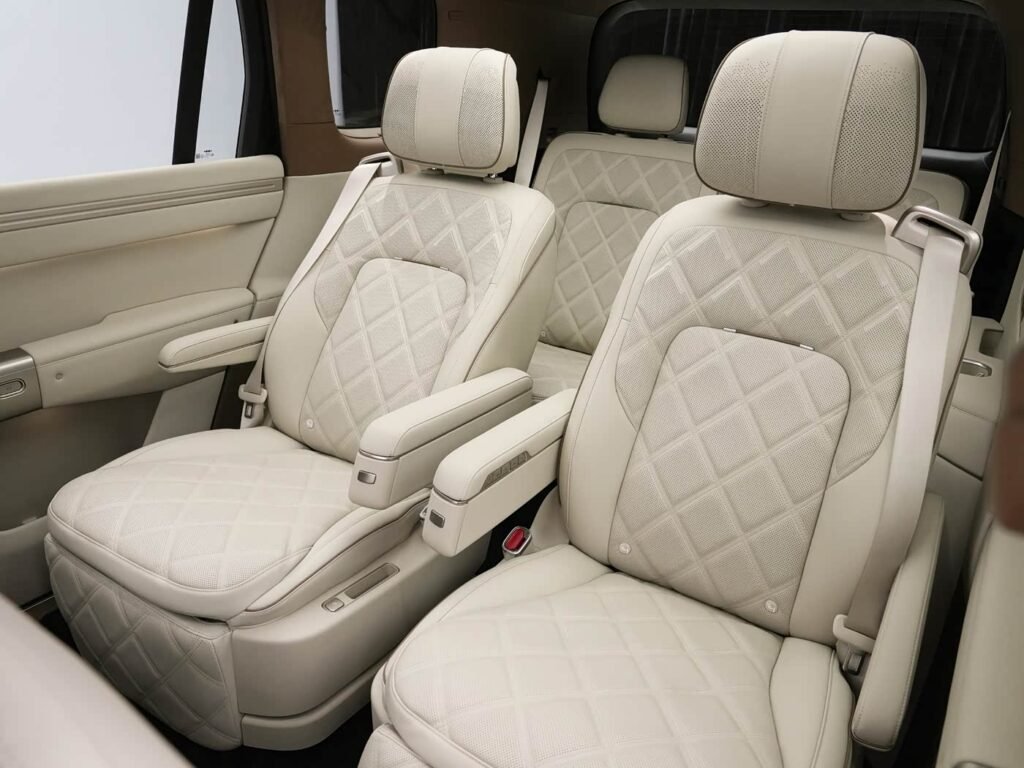
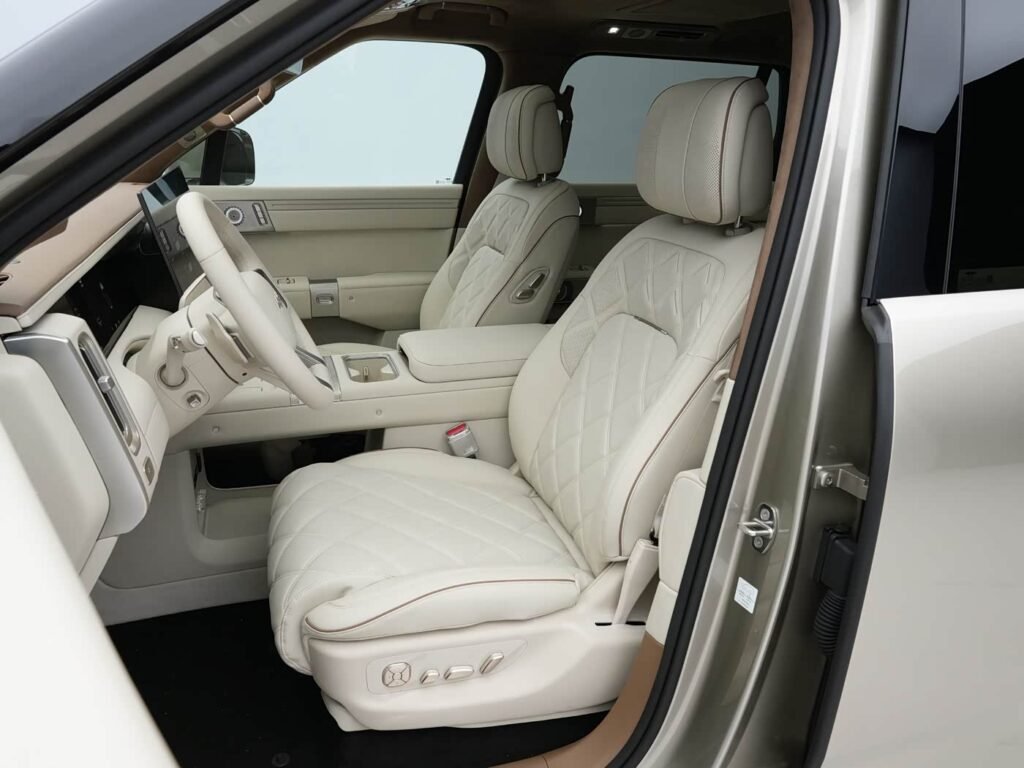
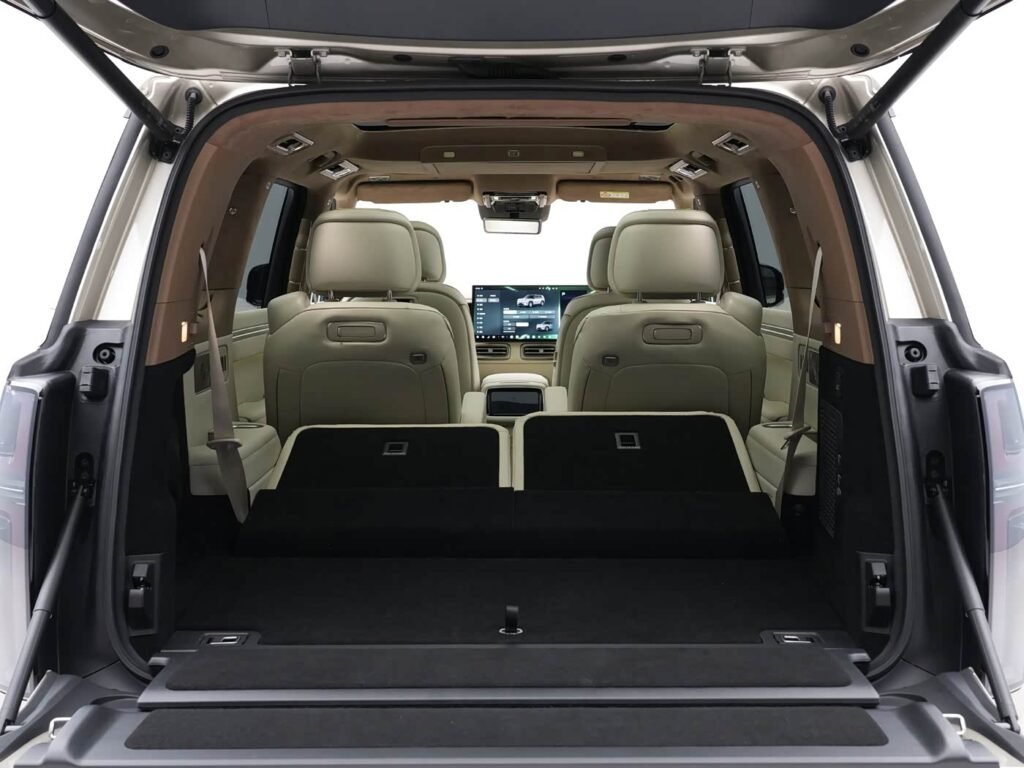
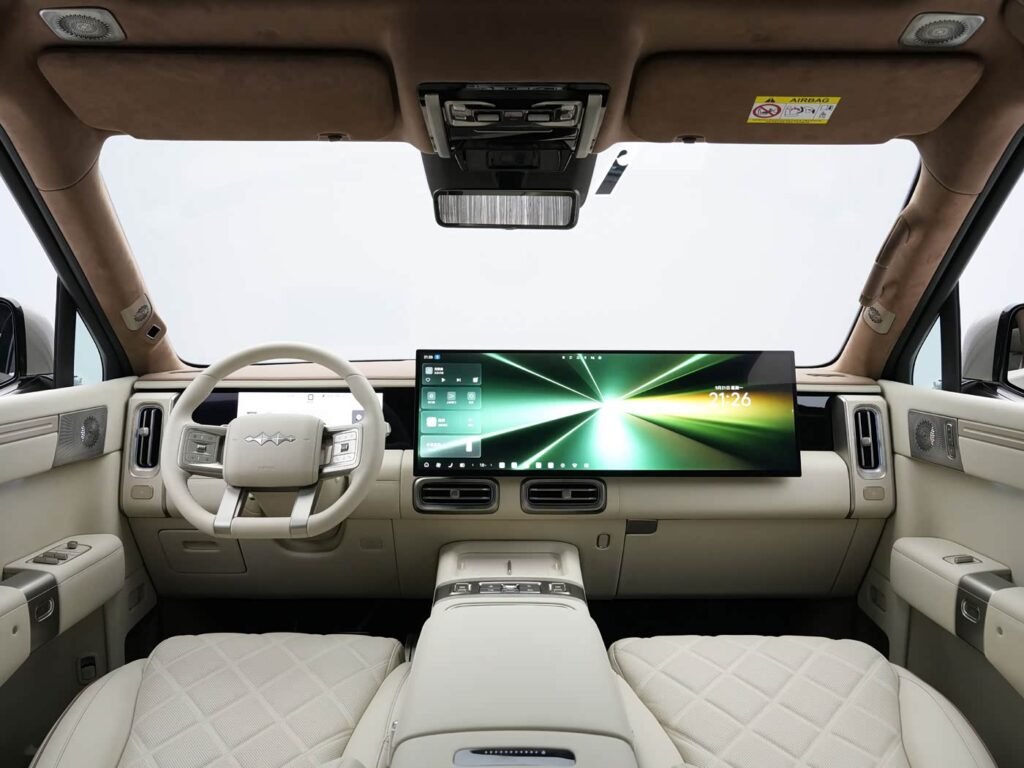
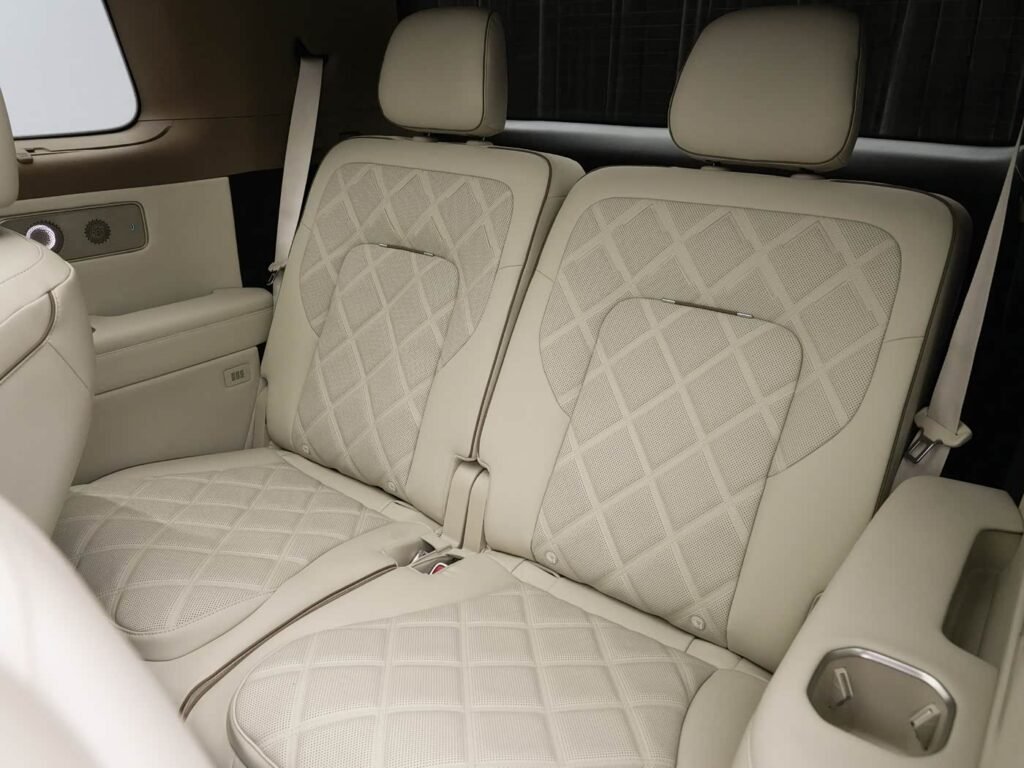
Inside, the Titanium 9 seats six across three rows, with two independent chairs in the second row and a three-seat bench in the third. The 3,130 mm wheelbase gives the second row enough travel for an adult on a long drive, and the separate chairs make the middle row easy to explain to a family buyer. The 30-inch screen is shared by all three configurations. A showroom can demonstrate one car and show the same cabin to every visitor. Because the seating layout does not change, the order decision rests on configuration code and delivery timing.
The three Titanium 9 configurations share the 66.48 kWh battery, 400 kW output, 675 N·m and 400 km CLTC range. What changes is curb weight and top speed: one version is 2,865 kg and 200 km/h, the other two are 2,965 kg and 220 km/h. A buyer who tests one car and orders another should be told that the published top speed is not identical across the line. The six-seat cabin, 30-inch screen and 655 litre boot are common. Written configuration keeps the shipment aligned with the car that was demonstrated.
How it drives
One drivetrain serves the Titanium 9: a 115 kW petrol engine with permanent-magnet motors at the front and rear axle, producing 400 kW and 675 N·m. Four-wheel drive is standard, and the 0–100 km/h time is 4.8 seconds on all three configurations. Top speed is 200 km/h on one version and 220 km/h on the other two. For a workshop, that means one parts description for the whole order. For a sales team, the useful point is that the six-seat layout and the four-wheel-drive system are both standard, not options to be quoted separately.
The Titanium 9 uses a 66.48 kWh battery rated at 400 km on CLTC, with 22.4 kWh/100 km consumption. Fast charging from 10% to 97% takes 9 minutes, and a 70 litre fuel tank supports longer routes. The source table quotes 0.46 L/100km under a fuel label but gives no charge-depleting figure, so that field is recorded as not disclosed. An importer should quote the electric range, charge window and tank size as three separate lines. The 400 km figure is the headline and should always be shown with the CLTC cycle name.
A Titanium 9 quotation should not turn the 0.46 L/100km row into a charge-depleting claim; the source table does not provide that figure. The load-capacity row also lists a value below the car’s own curb weight and was removed during verification. Both gaps are recorded rather than filled. The reliable figures are the 66.48 kWh pack, the 400 km CLTC range, the 9-minute charge window, the 70 litre tank and the six-seat layout. Those are enough to write a clear offer without borrowing a number from another model.
Interior & details
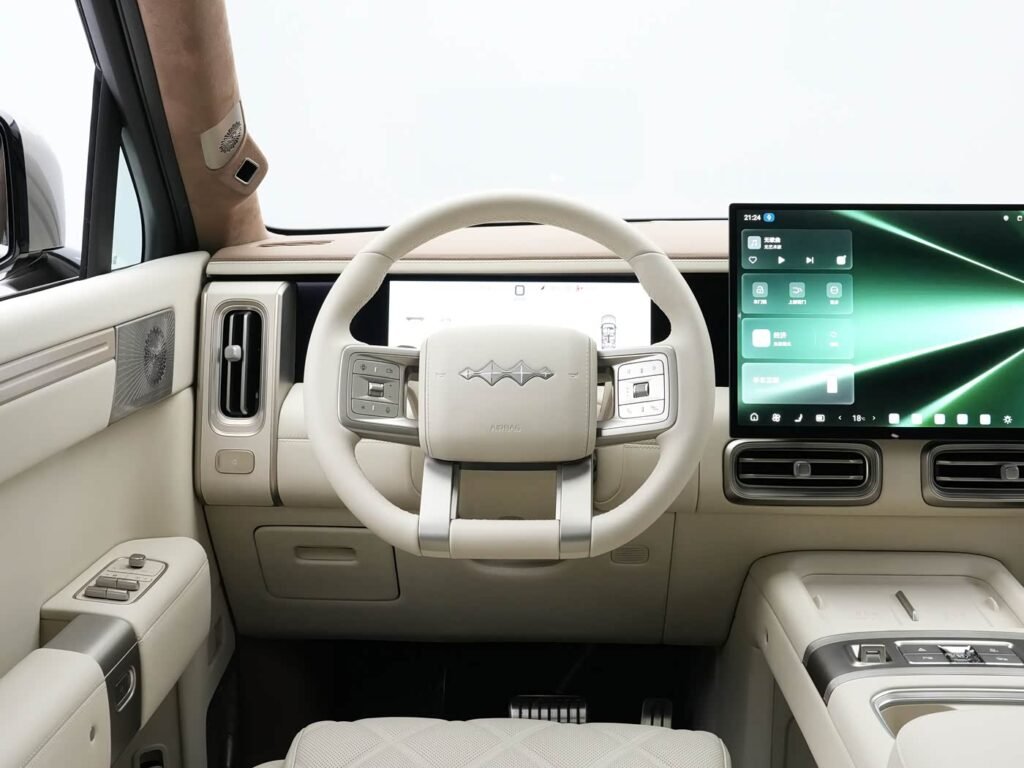
Interior and close-up detail from the Fangchengbao Titanium 9 current production car.
FAQ
Is the Titanium 9 a plug-in hybrid?
The Titanium 9 is a plug-in hybrid with a 115 kW petrol engine and a 66.48 kWh battery. All three configurations are four-wheel drive with 400 kW and 675 N·m, rated at 400 km on CLTC. It has six seats across three rows and a 30-inch screen. Check the configuration on the quotation, because top speed and curb weight are not identical across the line.
How far can the Titanium 9 drive on electricity?
Electric range on the Titanium 9 is 400 km on CLTC from a 66.48 kWh battery, with 22.4 kWh/100 km consumption. Fast charging from 10% to 97% takes 9 minutes and the fuel tank is 70 litres. CLTC does not compare directly with WLTP or EPA, so quote the cycle name with the figure. All three configurations share the same pack and range; the differences are curb weight and top speed.
How long does charging take on the Titanium 9?
Charging the Titanium 9 takes 9 minutes from 10% to 97% on every configuration. No AC charge time is published, so do not promise a wall-box duration. The 66.48 kWh battery, 30-inch screen and six seats are shared. Ask for the configuration code in writing before a demonstration is booked. That determines the published top speed and the curb weight used in a loading plan.
Can the Fangchengbao Titanium 9 be exported to my country?
Approval depends on the destination, not only on the Titanium 9. Some markets accept a plug-in hybrid SUV under existing rules, while others ask for model-specific certification before registration. We check the route for your port before you commit and list the documents the clearing agent will request. Lighting rules and charging connector standards are common points of review. We then work through the paperwork.
Can the Fangchengbao Titanium 9 be exported as a new car?
No. The Titanium 9 is not authorized for new-car export at present. Authorization is granted per model and per model year, so it cannot be carried over from another year. We re-check the list before each order and confirm the position in writing. Send the model year, destination and volume, and we will state what the current rules allow before you commit to a tender or release a deposit.


Reviews
There are no reviews yet.